

Context
About 1 in 5 Australian workers is casual. Casual workers are employed on an as-needed basis, without guaranteed hours or ongoing ties to their employer. They receive a 25% pay loading to offset the loss of benefits such as job security, holiday pay, and sick pay.
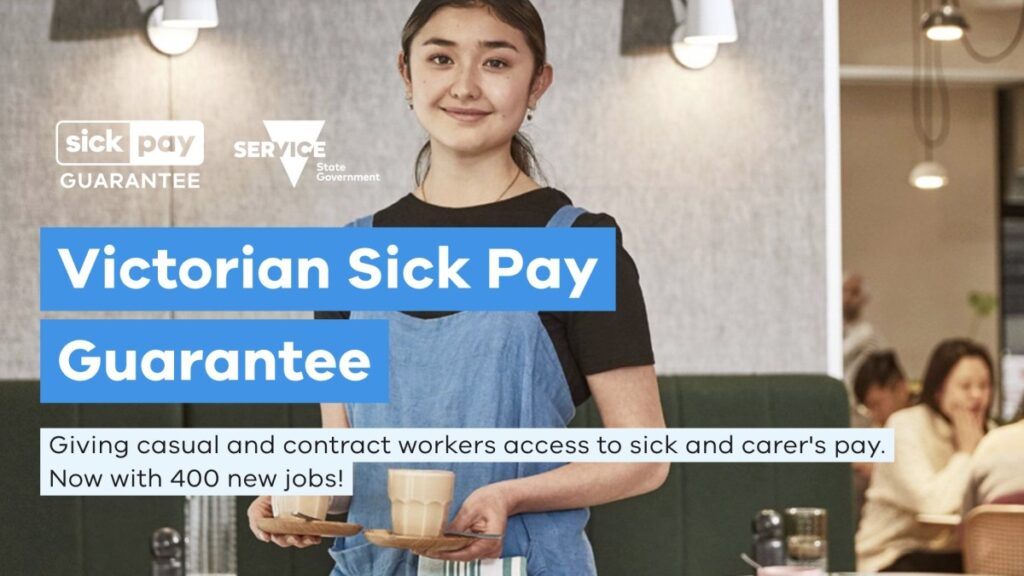
During the second COVID-19 wave in late 2020, the Victorian Government committed $247 million to the Sick Pay Guarantee pilot. The objective was to provide immediate support while testing whether sick pay access for casual and gig workers reduces public health risks.
A human-centred, co-designed policy and technology approach enabled a rapid digital claims service balancing accessibility and governance. Over two years, the program reached 125,000+ workers, processed 1m+ claims, achieved ~2-day turnaround, and maintained 90%+ customer satisfaction.
Observations
1. How is capital allocated and transformed into mission‑oriented public outcomes?
Staying home when sick generates public benefit but creates a free-rider problem for firms. During the pandemic, the State of Victoria absorbed this risk by funding portable sick pay and shifting the insurance function to the government.
The pilot found some businesses, including large multi-site companies, had already enabled casual workers to access sick pay through internal arrangements. However, high-casual sectors (e.g. hospitality, cleaning) typically operate on thin margins. Mandating employer-only funding risks distorting employment relationships or driving cost pass-through.
Public financing allowed the State to absorb initial risk while generating operational evidence on behavioural and economic effects. A durable funding model will likely require contributions from governments, employers, and platforms, proportionate to realised benefit and capacity to pay.
Insight: Sustainable funding models emerge when cost allocation reflects both who gains value and who can absorb costs without distorting the system.
2. How is capital governed and protected over time?
The Victorian Department of Jobs, Skills, Industry and Regions implemented the pilot with ministerial oversight and an advisory group of senior leaders across community groups, industry bodies, trade unions, and businesses.
Clear eligibility verification strengthened user confidence, supported by operational evidence and integrity controls that met governance expectations of funders and stakeholders.
Monitoring and evaluation were embedded from inception, supported by real-time data aggregation and reporting. Core administrative metrics included uptake, processing times, and user satisfaction, complemented by behavioural and economic indicators.
Question: What governance settings enable both accessibility and integrity at scale?
Research considerations
The program does not sit neatly within the “For Good” domain but surfaces a recurring coordination problem: who should fund outcomes where value is diffuse and beneficiaries unclear.
The State, acting as an active, risk-bearing agent (Mazzucato, 2013), temporarily filled this gap by providing capital, generating evidence, and enabling coordination across policy-makers, community groups, industry bodies, trade unions, and businesses.
This case demonstrates how short-term public pilots can establish system conditions by reducing uncertainty, aligning stakeholders, and generating decision-relevant evidence.
Question: How should funding responsibilities be shared when beneficiary boundaries are unclear?